
Condition scoring and structured check items
Depending on the report type, this can include scored results, pass or fail or not-applicable items, and a more structured picture of how the equipment is tracking overall.
A proper inspection report is more than a service sheet. It records what was checked, what condition the equipment is in, what was missing or failed, and what needs attention next. That makes the report useful for workshop owners, insurers, maintenance planning, pre-relocation checks, and any job where a documented condition picture matters.
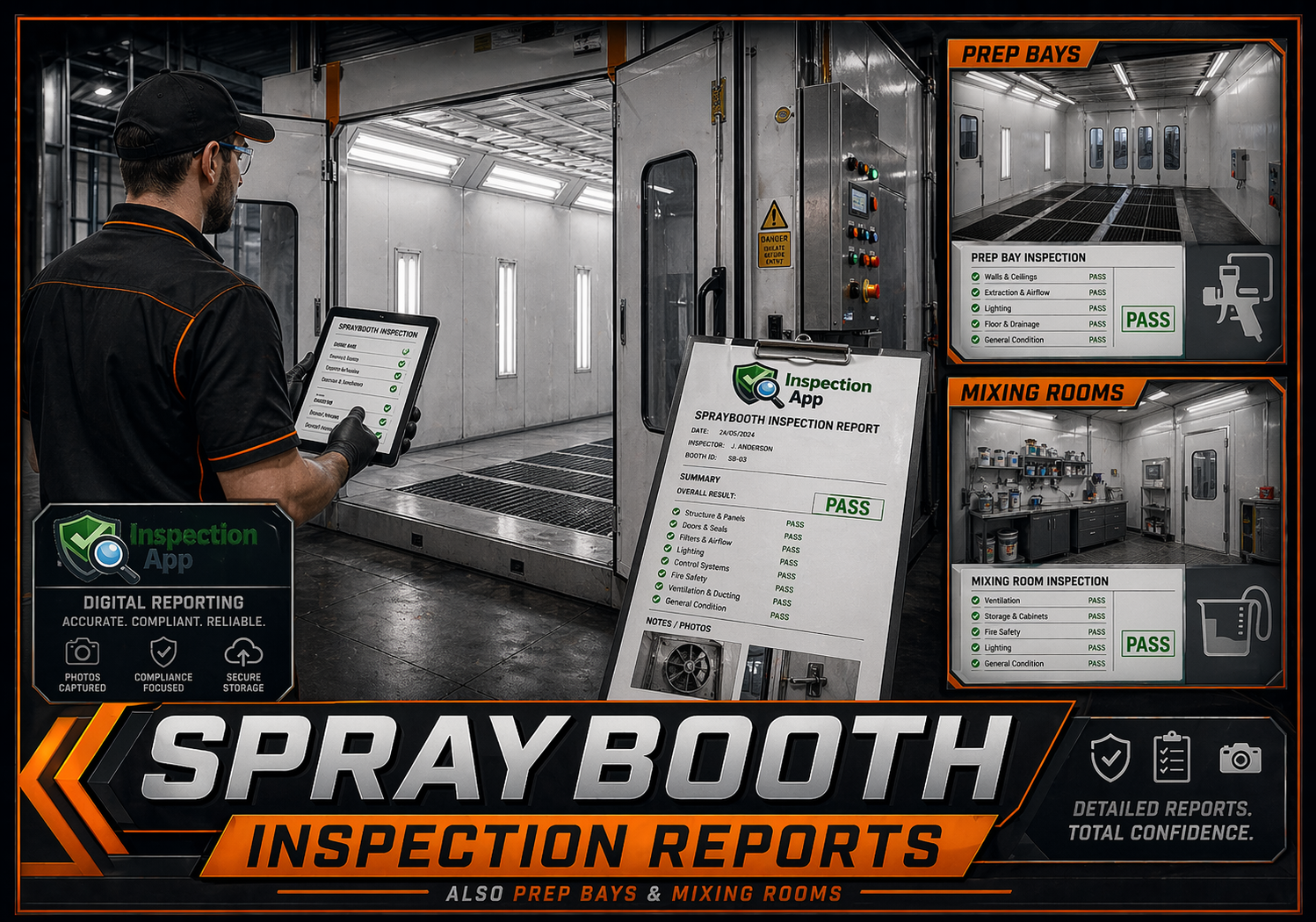
Inspection reports are useful where a verbal opinion is not enough. That could be a workshop owner planning future work, somebody needing a clearer picture before authorising repairs, a pre-purchase or pre-relocation check, or a third party asking for a documented record of condition.
The report format matters because it creates a usable record. Photos, comments, pass or fail style items, visible faults, and condition notes all make the result more useful than a rough memory of what was said on site.
The support can apply to spray booths, prep bays, paint mixing rooms, and related paint shop equipment, especially where the customer needs a clearer decision path afterwards.
A report becomes valuable when it helps somebody make a decision. That could be whether to repair now, budget for later, proceed with a relocation, line up a service and parts list, or show an insurer or manager exactly what condition the equipment is in.
Depending on the report type, this can include scored results, pass or fail or not-applicable items, and a more structured picture of how the equipment is tracking overall.
Images and written notes anchor the findings so the report can be used later rather than remembered loosely.
Reports can record visible faults, missing items, worn parts, maintenance concerns, and the general condition issues that are affecting reliability or presentation.
If the findings point toward servicing, repairs, controls work, parts, or relocation-related issues, the next step can be framed much more clearly.
The example report behind this page is detailed for a reason. The aim is to produce a real condition record, not a vague one-liner.
Filters, dampers, ducts, exhaust chamber condition, general cleanliness, and other signs that airflow or servicing standards have slipped.
Burner components, control board items, safety devices, VSD drives, and the condition clues that matter before a fault turns into downtime.
Missing door seals, damaged hardware, missing labels, blown light tubes, and other visible issues that affect usability, safety, or presentation.
General booth condition, visible wear, and the broader picture of how well the equipment has been looked after over time.
The aim is to build a broad condition picture rather than focus too narrowly on one issue.
Observations, comments, photos, and condition notes are what make the report useful later on.
Not every defect carries the same weight. The report should help separate urgent items from longer-term ones and make it easier to prioritise the follow-up work.
The practical value comes when the customer can move from the report into servicing, repairs, parts supply, or relocation planning with more confidence.
Use the links below to move into the next relevant page.